Have you been gaining weight despite maintaining a balanced diet and exercising regularly? Are you finding it difficult to lose weight, particularly around your abdomen? While lifestyle habits play an important role in weight management, hormonal changes and certain endocrine conditions may also contribute to unexplained weight gain.
Hormones regulate metabolism, appetite, energy use, blood sugar, and fat storage. When these processes are affected by an underlying medical condition, managing weight may become more challenging. Understanding the connection between hormonal imbalance and weight gain can help you identify possible causes and seek appropriate medical advice.
If you are looking for hormonal imbalance or weight management care in Chandigarh, EKA Healthcare provides specialised endocrinology care under Dr. Jasmeet Kaur, MBBS, MD Internal Medicine (PGI Chandigarh), DM Endocrinology (PGI Chandigarh).

How Do Hormones Affect Body Weight?
Hormones are chemical messengers that help regulate several functions in the body, including metabolism, hunger, fullness, and blood glucose levels.
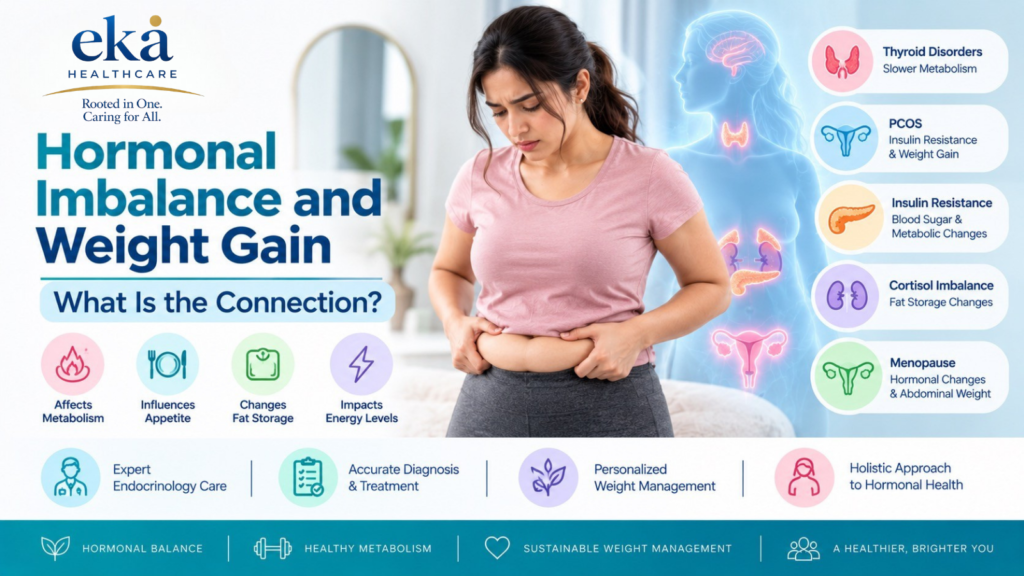
Insulin helps control blood sugar, thyroid hormones influence how the body uses energy, and appetite-related hormones help regulate hunger and satiety. Reproductive hormones can also affect body composition during different stages of life.
When a hormonal disorder affects these functions, it may contribute to weight gain or make weight management more difficult. However, not all weight gain is caused by hormonal imbalance. Diet, physical activity, sleep, stress, medications, genetics, and other medical conditions can also influence body weight.
5 Hormonal Conditions That May Contribute to Weight Gain
1. Hypothyroidism
Hypothyroidism occurs when the thyroid gland does not produce enough thyroid hormones. These hormones help regulate metabolism and energy use.
Common symptoms may include:
👉🏻Unexplained weight gain
👉🏻Persistent fatigue
👉🏻Feeling unusually cold
👉🏻Constipation
👉🏻Dry skin or hair thinning
👉🏻Difficulty concentrating
Hypothyroidism can contribute to weight gain, partly through changes in metabolism and fluid retention. However, the amount of weight change varies, and other causes may also be present.
A doctor may recommend thyroid function tests, such as TSH and free T4, depending on your symptoms and medical history.
2. Polycystic Ovary Syndrome (PCOS)
PCOS is a common hormonal and metabolic condition that can affect women during their reproductive years. It may involve irregular ovulation, increased androgen activity, and insulin resistance.
Women with PCOS may experience irregular periods, acne, excess facial hair, and difficulty managing weight. Some women with PCOS gain weight, while others do not.
Insulin resistance can contribute to metabolic difficulties in some patients. Management may include lifestyle changes, treatment for specific symptoms, and medication when appropriate.
If you experience weight changes alongside irregular periods or excess hair growth, consider consulting a healthcare professional for an assessment.
3. Insulin Resistance
Insulin helps glucose move from the bloodstream into cells for energy. With insulin resistance, the body’s cells respond less effectively to insulin, and the pancreas may produce more insulin to help maintain blood glucose levels.
Insulin resistance is associated with conditions such as prediabetes, type 2 diabetes, and PCOS. It may occur alongside excess body fat, particularly abdominal fat, although the relationship is complex and varies between individuals.
Management focuses on improving metabolic health through sustainable nutrition, regular physical activity, sleep, and medication when indicated.
4. Menopause and Perimenopause
During perimenopause and menopause, changes in reproductive hormones can influence body composition, sleep, and fat distribution.
Some women notice an increase in abdominal fat or a gradual change in weight during this stage of life. Age-related changes in muscle mass, activity levels, sleep, and other factors can also contribute.
Maintaining muscle through appropriate strength-building exercise, following a balanced diet, and addressing sleep difficulties can support healthy weight management. Treatment should be based on individual symptoms and medical needs.
5. Cushing’s Syndrome
Cushing’s syndrome is an uncommon condition caused by prolonged exposure to excessive cortisol. It may result from certain medications or, less commonly, excess cortisol production within the body.
Possible signs include weight gain concentrated around the abdomen and upper body, a rounded face, easy bruising, wide purple stretch marks, and muscle weakness.
These symptoms can have other causes, but a combination of characteristic signs warrants medical assessment. Testing for Cushing’s syndrome is recommended when a clinician suspects the condition; it is not necessary for everyone experiencing weight gain.
Can Hormonal Imbalance Make Weight Loss Difficult?
Yes, certain hormonal conditions may make weight management more challenging. For example, untreated hypothyroidism can affect energy levels, while PCOS and insulin resistance may influence metabolic health.
Fatigue, poor sleep, and changes in appetite can also affect daily activity and eating patterns. In such cases, addressing the underlying condition may support an overall weight-management plan.
However, there is no single hormone test or treatment that is appropriate for everyone. Effective care starts with identifying the factors contributing to an individual’s weight changes.
How Is Hormonal Weight Gain Diagnosed?
An endocrinologist may review your weight history, symptoms, menstrual history where relevant, medications, sleep patterns, diet, and family history.
Depending on the findings, investigations may include:
👉🏻Thyroid function tests
👉🏻Blood glucose or HbA1c testing
👉🏻Lipid profile
👉🏻Selected hormone tests when clinically indicated
👉🏻Additional investigations based on suspected conditions
Not every patient needs every test. Testing should be guided by symptoms and clinical assessment rather than relying on broad hormone panels or self-diagnosis.
How Can You Manage Weight Associated With Hormonal Conditions?
A personalised plan may combine medical treatment with sustainable lifestyle changes.
Follow a balanced diet: Include vegetables, whole grains, pulses, appropriate protein sources, and healthy fats. Limit frequent consumption of highly processed foods and sugary drinks.
Stay physically active: Aim for regular movement and incorporate strength-building activities suited to your abilities and health status.
Prioritise sleep: Maintain a consistent sleep schedule and seek advice if persistent sleep problems interfere with daily life.
Manage stress: Relaxation techniques and a manageable routine may support sleep, eating habits, and general well-being.
Follow prescribed treatment: If a hormonal disorder is diagnosed, take medications as directed and attend recommended follow-up appointments. Avoid hormone supplements or weight-loss medication without appropriate medical advice.
Hormonal Imbalance and Weight Management at EKA Healthcare, Chandigarh
If you are experiencing unexplained weight gain, difficulty losing weight, persistent fatigue, irregular periods, or other symptoms that may suggest an endocrine condition, professional evaluation can help clarify the cause.
At EKA Healthcare, Dr. Jasmeet Kaur provides specialised endocrinology care for conditions involving thyroid function, PCOS, diabetes, insulin resistance, and metabolic health. Treatment recommendations are tailored to the patient’s clinical needs.
Book a Consultation
Dr. Jasmeet Kaur
MBBS, MD Internal Medicine (PGI Chandigarh)
DM Endocrinology (PGI Chandigarh)
EKA Healthcare
SCO-230, Sector 40-D, Chandigarh
- Consultation hours: Monday–Saturday, 10 AM–5 PM
- Appointments: With prior appointment
- Call: +91-7986269709
- WhatsApp: +91-7717489629
- Email: contact@ekahealthcare.com
Weight gain can have multiple causes, and hormonal imbalance is only one possibility. If your weight changes are unexplained or accompanied by other persistent symptoms, consult a qualified healthcare professional for an appropriate evaluation.
Frequently Asked Questions (FAQs)
1. Can hormonal imbalance cause weight gain?
Yes. Conditions such as hypothyroidism, PCOS, and certain metabolic disorders may contribute to weight gain or make weight management more difficult. However, weight gain can have several causes.
2. Which hormones are responsible for weight gain?
Thyroid hormones, insulin, cortisol, and reproductive hormones can influence metabolism, appetite, and body composition. The impact depends on the underlying condition.
3. How do I know if my weight gain is caused by hormonal imbalance?
Unexplained weight gain accompanied by symptoms such as persistent fatigue, irregular periods, hair thinning, or unusual sensitivity to cold may warrant medical evaluation. A doctor can recommend appropriate tests based on your symptoms.
4. Can hormonal weight gain be reversed?
Weight management may improve when an underlying hormonal condition is appropriately treated. Treatment may include medication, dietary changes, physical activity, and regular medical follow-up, depending on the cause.
5. Which doctor should I consult for hormonal weight gain in Chandigarh?
An endocrinologist can evaluate possible hormonal and metabolic causes of weight gain. At EKA Healthcare, Dr. Jasmeet Kaur provides specialised endocrinology care in Chandigarh.
6. Which tests are recommended for hormonal weight gain?
Depending on your symptoms, a doctor may recommend thyroid function tests, blood glucose or HbA1c testing, and selected hormone investigations. Not everyone requires the same tests.